

1106 0 Plant Assets: Definition University of Pennsylvania

After almost a decade of experience in public accounting, he created MyAccountingCourse.com to help people learn accounting & finance, pass the CPA exam, and start their career. The company would now adjust the carrying amount to £90,000, and depreciation would be calculated using the revalued amount. If the asset’s value https://project1-9n977ug19y.live-website.com/merced-county-california-assessor-s-office/ is found to be impaired, the carrying amount would be reduced.
Initial Recognition
- Properly managing and accounting for plant assets ensures that financial statements are reliable, giving a realistic view of both the company’s stability and its long-term operational efficiency.
- In accounting terms, plant assets are also known as property, plant, and equipment (PP&E).
- Without good asset management, businesses could face downtime and high maintenance costs.
- Land appreciates rather than depreciates, so it’s accounted for at market value.
Different industries may choose different depreciation methods to match their usage patterns better. Once these items are used in production or other operations, they’re treated as plant assets on the books. We should be wary of any indications of impairment such as a downturn in business which suggests that the plant assets may not be able to generate as much value as they could before.
Acquisition Costs
We’re just like you–Australian business owners–and not, in any way, working as financial or professional advisors. Based on the purpose of depreciation mentioned above, depreciation should only commence when the asset is ready for use and is at the location that it is intended to be used. The same process will be repeated every year at the end of the financial year. Get stock recommendations, portfolio guidance, and more from The Motley Fool’s premium services. When researching companies, the financial statement is a great place to start. Shaun Conrad is a Certified Public Accountant and CPA exam expert with a passion for teaching.
Automate and error-proof your asset tracking processes.
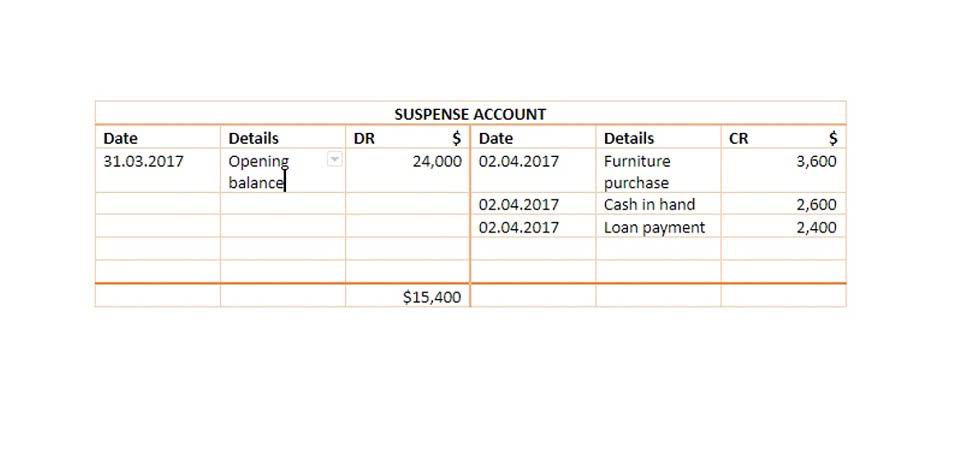
Hence, we will calculate depreciation proportionately based on the useful lives of the plant assets. It is interesting to note that IAS 16 has pointed out that a plant asset purchased for safety or environmental reasons could qualify as a plant asset even if it does not contribute to revenue. An impairment occurs when the carrying amount of a plant asset exceeds its recoverable amount. The recoverable amount is the higher of the asset’s fair value less costs to sell and its value in use. If an impairment loss is recognized, the asset’s carrying amount is reduced to its recoverable amount. In this article, we’ve explained Suspense Account the concept of plant assets in very detail.
- Each industry tailors its asset management to meet operational needs, balancing the cost, maintenance, and efficiency of these assets to stay competitive and maintain service standards.
- This categorization provides clarity in financial reporting, showing stakeholders the long-term resources a business relies on to maintain and grow its operations.
- However, PP&E should always be considered in tandem with other balance sheet factors.
- In retail, store buildings, shelving, and point-of-sale equipment play a significant role in customer service and sales.
- Keeping track of these assets helps businesses run smoothly and prevents loss or theft.
Current Assets versus Plant Assets: What’s the Difference?
They carry a monetary value used to earn revenue and profit for the enterprise. They are usually land and building, plant and machinery that may be fixed or movable, or any other equipment that can be categorized as the same. They are recorded at cost and are depreciated over the estimated useful life, or the actual useful life, whichever is lower. In this article, we’ll explore the key components of plant asset management, its benefits, and how it differs from traditional asset management practices.
Relate Business solutions and answers
A company invests in these assets with the expectation of their sustained utility over a significant duration. This extended useful life is a fundamental aspect of their classification. Plant assets possess several defining attributes that distinguish them within a company’s financial structure.
Why is it important for a business to know about its plant assets?
This process is a method of cost allocation, not asset valuation, and it applies to most plant assets except land. Its purpose is to match the expense of using the asset with the revenues it helps generate over its operational period, adhering to the matching principle in accounting. Plant asset management is a critical strategy for businesses aiming to optimize operations and reduce costs. By implementing a comprehensive approach to managing physical assets, companies can significantly improve efficiency, productivity, and profitability.


While these assets might not directly contribute to production, they are essential for supporting employees in their roles and are often updated as a business grows or changes its office layout. Current assets are expected to be used within a year or short-term time frame. Current assets typically include cash, inventory, accounts receivable, and other short-term liquid assets. In contrast, plant assets represent long-term property expected to be around for at least a year, often quite a bit longer than that.
A new press technology has just launched in the market, and the company owner decided to acquire the machine. The cost of the machine is USD100,000, and it is expected to stay useful for five years with a residual value of USD10,000. Furniture and fixtures cover plant assets are defined as items like desks, chairs, tables, shelving, cabinets, and lighting fixtures that create functional workspaces. Although generally lower in cost than machinery or buildings, these assets contribute to a productive and organized working environment. Furniture and fixtures are also depreciable over time, with their useful life depending on materials, design, and usage.
These differences impact how each asset type is managed, valued, and reported in financial statements. Plant assets are categorized as non-current assets on the balance sheet under “property, plant, and equipment” (PP&E). This classification distinguishes them from current assets, which are expected to be used or converted to cash within a year. As non-current assets, plant assets play a continuous role in operations, with their value recorded at historical cost, less accumulated depreciation. This categorization provides clarity in financial reporting, showing stakeholders the long-term resources a business relies on to maintain and grow its operations.

Hey I know this is off topic but I was wondering if you knew
of any widgets I could add to my blog that automatically tweet my newest twitter
updates. I’ve been looking for a plug-in like this for quite some time and was
hoping maybe you would have some experience with something like this.
Please let me know if you run into anything. I truly enjoy reading your blog and I look forward to your new updates.
https://xn--krken23-bn4c.com
Нравится, что в казино атом онлайн
можно играть в демо-режиме перед реальными ставками.
Это помогает изучить новые игровые
автоматы atom без риска для кошелька.
atom casino официальный сайт
Казино селектор играть
онлайн можно даже при слабом интернете.
Selector casino online оптимизирован отлично.
Игры загружаются быстро.
web page